
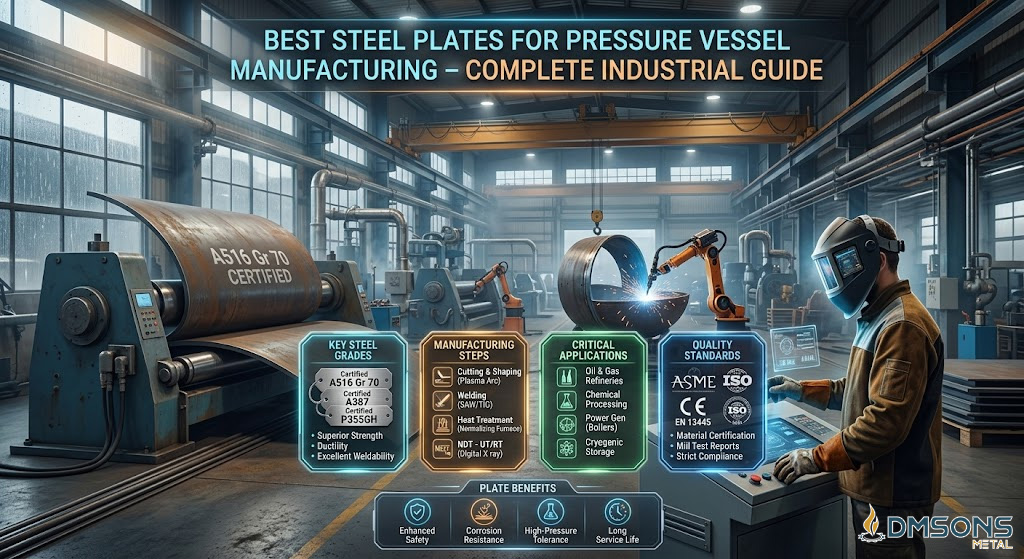
Pressure vessels are critical industrial components used in industries such as oil & gas, petrochemical, chemical processing, power generation, refineries, fertilizers, pharmaceuticals, and heavy manufacturing. Since these vessels operate under high pressure and temperature conditions, selecting the right steel plate is essential for operational safety, long-term durability, and industrial performance.
One of the most important decisions in pressure vessel manufacturing is choosing the correct steel plate grade.
The wrong material selection can lead to:
- Structural failure
- Pressure leakage
- Corrosion damage
- Thermal cracking
- Reduced vessel life
- Safety hazards
- Expensive maintenance
Pressure vessel steel plates are specially engineered to withstand:
- High pressure
- Elevated temperatures
- Corrosive environments
- Mechanical stress
- Thermal cycling
Understanding the best steel plates for pressure vessel manufacturing helps industries improve operational reliability, safety compliance, fabrication performance, and long-term efficiency.
At DMSONS Metal, industries source industrial-grade pressure vessel steel plates for boilers, reactors, storage tanks, heat exchangers, refinery systems, petrochemical plants, and process industries.
This complete industrial guide explains:
- What pressure vessel steel plates are
- Types of pressure vessel steel plates
- Important material properties
- Popular grades
- Industry applications
- Material selection factors
- Benefits of pressure vessel plates
- How to choose the right pressure vessel steel supplier
What Are Pressure Vessel Steel Plates?
Pressure vessel steel plates are specialized steel materials designed for manufacturing vessels that store gases or liquids under high pressure and temperature conditions.
These plates are manufactured to meet strict industrial standards for:
- Strength
- Toughness
- Weldability
- Heat resistance
- Pressure handling capability
Pressure vessel plates are widely used in:
- Boilers
- Heat exchangers
- Storage tanks
- Chemical reactors
- Industrial process equipment
These steel plates must comply with stringent safety and engineering standards because pressure vessel failure can cause severe industrial accidents.
Important Properties of Pressure Vessel Steel Plates
Pressure vessel steel plates are selected based on several critical properties.
High Tensile Strength
The plates must withstand internal pressure without deformation or failure.
Excellent Toughness
Pressure vessels often operate under fluctuating temperatures and pressures. High toughness prevents cracking and brittle failure.
Heat Resistance
Many industrial systems operate at elevated temperatures. Pressure vessel steel must retain strength under thermal stress.
Good Weldability
Pressure vessels involve extensive welding during fabrication. Steel plates must support strong and reliable weld joints.
Corrosion Resistance
In chemical and process industries, resistance to corrosion is critical for long-term durability.
Types of Steel Plates Used in Pressure Vessel Manufacturing
Different types of steel plates are used depending on operating conditions.
Carbon Steel Pressure Vessel Plates
Carbon steel plates are among the most widely used materials for pressure vessel manufacturing.
Popular grades include:
- ASTM A516 Gr 60
- ASTM A516 Gr 70
Key Features
- Excellent strength
- Good weldability
- Cost-effective
- Suitable for moderate temperature applications
Industrial Applications
- Storage tanks
- Industrial boilers
- General pressure vessels
Carbon steel pressure vessel plates are economical and widely used across industries.
Alloy Steel Pressure Vessel Plates
Alloy steel plates contain additional alloying elements such as:
- Chromium
- Molybdenum
- Nickel
Popular grades include:
- ASTM A387 Gr 11
- ASTM A387 Gr 22
Key Features
- High-temperature strength
- Improved corrosion resistance
- Better creep resistance
Industrial Applications
- Refineries
- Petrochemical plants
- High-temperature process systems
Alloy steel plates are preferred for demanding operational environments.
Stainless Steel Pressure Vessel Plates
Stainless steel plates are used where corrosion resistance and hygiene are essential.
Popular grades include:
- SS304
- SS316
Key Features
- Excellent corrosion resistance
- Hygienic surface
- Chemical resistance
Industrial Applications
- Pharmaceutical industries
- Food processing plants
- Chemical reactors
Stainless steel pressure vessels are ideal for corrosive process environments.
Boiler Quality Steel Plates
Boiler quality plates are specially designed for high-pressure steam and thermal applications.
Key Features
- Heat resistance
- Pressure handling capability
- Thermal stability
Industrial Applications
- Boilers
- Steam systems
- Power plants
These plates are essential for thermal energy systems.
Most Common Pressure Vessel Steel Plate Grades
ASTM A516 Grade 70
One of the most widely used pressure vessel steel grades worldwide.
Key Benefits
- Excellent weldability
- Good notch toughness
- Reliable pressure performance
Common Applications
- Boilers
- Storage tanks
- Industrial pressure vessels
ASTM A387 Alloy Steel Plates
Designed for elevated temperature applications.
Key Benefits
- Heat resistance
- Oxidation resistance
- Long-term thermal stability
Common Applications
- Petrochemical plants
- Refineries
- High-temperature vessels
EN 10028 Pressure Vessel Steel Plates
European standard pressure vessel steel grades used in industrial engineering applications.
Common Applications
- Process industries
- European-standard industrial systems
Factors to Consider When Selecting Pressure Vessel Steel Plates
Operating Pressure
Higher operating pressure requires:
- Higher strength
- Better toughness
- Improved fatigue resistance
Operating Temperature
Elevated temperature environments require:
- Heat-resistant steel grades
- Thermal stability
- Creep resistance
Corrosive Environment
Chemical exposure may require:
- Stainless steel plates
- Alloy steel plates
- Corrosion-resistant materials
Fabrication Requirements
Industries must evaluate:
- Weldability
- Machinability
- Formability
before selecting the material.
Industry Standards & Compliance
Pressure vessel steel plates must comply with:
- ASTM standards
- ASME standards
- EN standards
- Industrial engineering codes
Industrial Applications of Pressure Vessel Steel Plates
Pressure vessel steel plates are used across multiple industrial sectors.
Oil & Gas Industry
- Storage tanks
- Refinery vessels
- Offshore process systems
Petrochemical Industry
- Chemical reactors
- Process vessels
- Heat exchangers
Power Plants
- Boilers
- Steam drums
- Thermal systems
Pharmaceutical Industry
- Sterile process vessels
- Chemical handling systems
Food Processing Industry
- Hygienic pressure vessels
- Processing tanks
Fertilizer Industry
- Chemical storage systems
- Pressure process equipment
Benefits of Using High-Quality Pressure Vessel Steel Plates
Using certified industrial-grade pressure vessel plates improves:
- Operational safety
- Equipment life
- Structural reliability
- Corrosion resistance
- Fabrication efficiency
- Long-term performance
It also reduces:
- Maintenance costs
- Downtime
- Operational risks
- Failure probability
Importance of Choosing the Right Pressure Vessel Steel Supplier
Selecting a reliable supplier is critical for industrial projects.
Industrial buyers should evaluate:
- Material certifications
- Testing standards
- Plate traceability
- Inventory availability
- Technical support
- Thickness range
- Delivery capability
A trusted supplier ensures:
- Consistent material quality
- Faster project execution
- Compliance with industrial standards
- Reliable long-term performance
Why Industries Choose DMSONS Metal
DMSONS Metal supplies industrial-grade pressure vessel steel plates for boilers, storage tanks, petrochemical systems, heavy engineering, and process industries.
Industries choose DMSONS Metal for:
- Wide range of pressure vessel steel grades
- Reliable industrial quality
- Certified material supply
- Custom plate sizes
- Fast industrial delivery
- Technical material support
- Bulk project supply capability
- Industrial sourcing expertise
The company serves:
- EPC contractors
- Pressure vessel manufacturers
- Refineries
- Power plants
- Fabricators
- Heavy engineering industries
Frequently Asked Questions
What are pressure vessel steel plates?
Pressure vessel steel plates are specialized steel materials designed for vessels operating under high pressure and temperature conditions.
Which steel plate is commonly used in pressure vessels?
ASTM A516 Grade 70 is one of the most commonly used pressure vessel steel plate grades.
What properties are important in pressure vessel steel plates?
Key properties include strength, toughness, weldability, heat resistance, and corrosion resistance.
Which steel plate is best for high-temperature pressure vessels?
Alloy steel plates such as ASTM A387 are commonly used for elevated temperature applications.
Are stainless steel plates used in pressure vessels?
Yes. Stainless steel plates are used in corrosive and hygienic industrial environments.
Why is weldability important in pressure vessel manufacturing?
Pressure vessels require extensive welding during fabrication, so reliable weld performance is critical.
Which industries use pressure vessel steel plates?
Oil & gas, petrochemical, power generation, pharmaceutical, food processing, and chemical industries widely use pressure vessel plates.
What is ASTM A516 Grade 70?
It is a widely used carbon steel pressure vessel plate grade known for strength and weldability.
What is the difference between boiler plates and pressure vessel plates?
Boiler plates are specifically designed for steam and high-temperature applications, while pressure vessel plates are used more broadly for pressure-containing systems.
Are alloy steel pressure vessel plates expensive?
Yes. Alloy steel plates generally cost more because of enhanced heat and corrosion resistance.
Why are certified steel plates important in pressure vessels?
Certified plates ensure safety, compliance, and reliable operational performance.
Can pressure vessel steel plates handle chemical exposure?
Yes. Stainless steel and alloy steel grades provide improved chemical resistance.
What standards apply to pressure vessel steel plates?
Common standards include ASTM, ASME, and EN specifications.
How do industries choose the right pressure vessel plate?
Industries evaluate pressure, temperature, corrosion exposure, fabrication requirements, and operational conditions.
Where can industries source industrial-grade pressure vessel steel plates?
Industrial buyers can source high-quality pressure vessel steel plates from DMSONS Metal for engineering and industrial applications.
Conclusion
Pressure vessel steel plates are critical materials for industrial safety, operational reliability, and long-term performance in high-pressure and high-temperature environments. Selecting the right steel plate depends on pressure conditions, thermal exposure, corrosion resistance, fabrication requirements, and industry standards.
Carbon steel, alloy steel, stainless steel, and boiler quality plates all play important roles in pressure vessel manufacturing across industrial sectors.
For industries seeking reliable pressure vessel steel plate supply, technical support, and industrial-grade material solutions, DMSONS Metal supplies high-quality pressure vessel steel plates for fabrication, engineering, power generation, petrochemical systems, and heavy industrial applications across India and international markets.